
WHY TAKEOFFS FAIL?
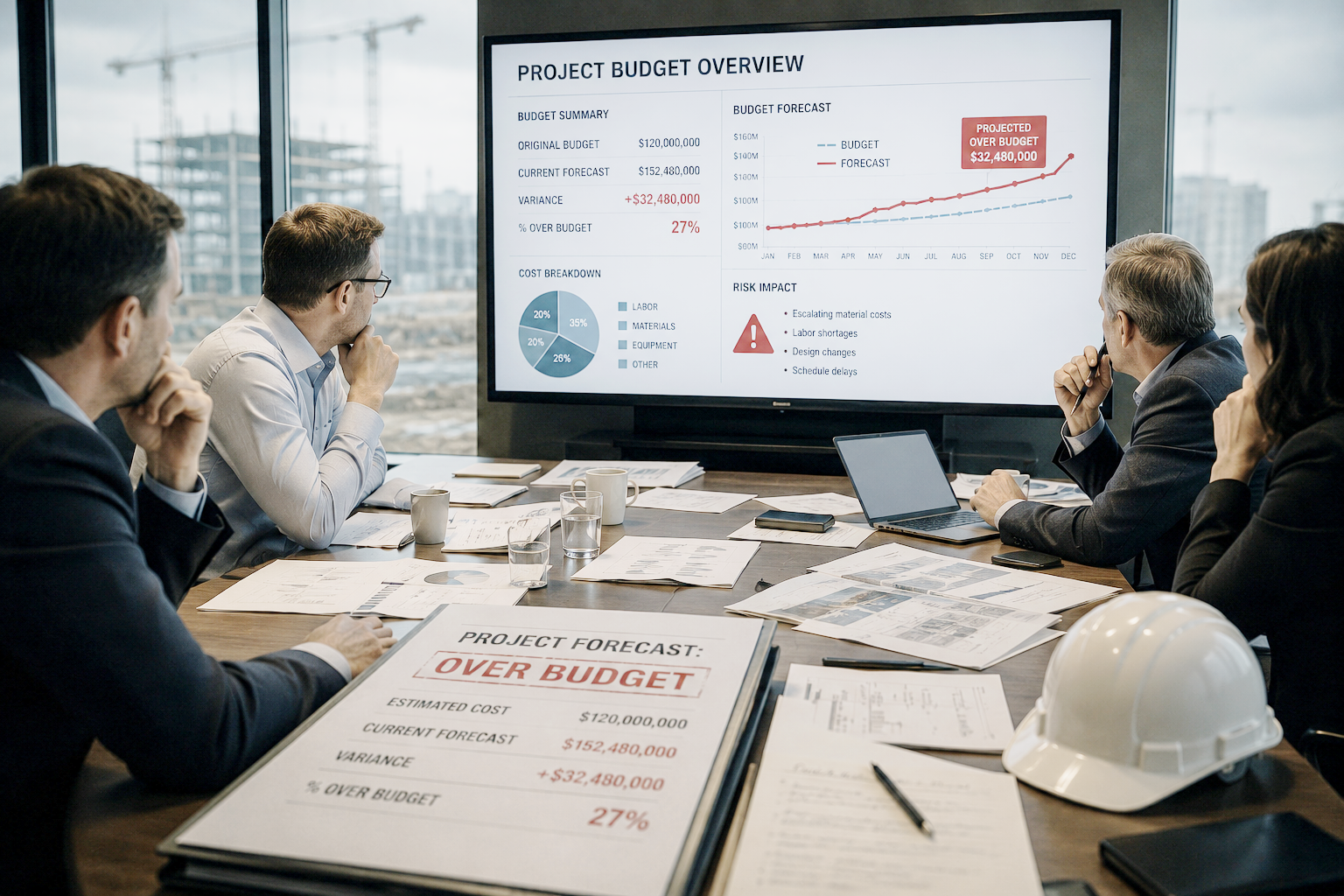
The construction industry spends millions correcting problems that start long before the first piece of lumber is ordered or the first utility is stubbed in. Most of these problems trace back to the same four causes.
Understanding, identifying, and planning ahead for those four cause is the first step toward building a project that finishes the way it was budgeted and estimated.
Sierra Nevada Plan Review was built specifically to address these four causes. Every takeoff we produce is designed to close the gap between what the plans say and what the project will actually require.
79 PERCENT
OF LARGE PROJECTS EXCEED THEIR BUDGET.
#1 CAUSE
ALIGNMENT FROM TAKEOFF THROUGH BUILD.
Why takeoff accuracy varies so widely.
UNDERSTANDING THE MARKET
MANUFACTURER PROVIDED TAKEOFFS
A starting point. Very limited scope.
Manufacturer takeoffs are limited and well-suited to their own product line. For clients and projects that require complete hardware, lumber, and building envelope scopes in one deliverable, a broader deliverable is needed.
OFFSHORE TAKEOFF SERVICES
Variable accuracy, limited scope, variable turnaround.
High-volume, cheap services, that prioritize speed. Understanding regional code requirements, depth of product knowledge, and the building methods and conventions of the local contractor vary significantly by provider and personnel. Building in the five distinct regions in the USA is complicated enough without the potential communication gap and lack of familiarity of regional and local construction practices. Without a domestic, field-trained reviewer in the process, regional nuance rarely makes it into the final deliverable.
INDEPENDENT OPERATORS
Specific scope experience, known factor.
Many independent operators have been in business for years. They specialize in certain scopes, and you typically know what you get with them. Turn around speed is limited by the number of hours in a day, and they are challenged with scaling or passing their knowledge to anyone else. Output can be difficult to interpret or share with other team members. Large projects are not usually within their ability to accurately turn quickly.
SIERRA NEVADA PLAN REVIEW
Speed and accuracy, with a field trained eye for detail.
We use the speed of modern tools, offshore capacity, and AI assisted compilers to provide quick and accurate takeoffs that fit your building needs. Every takeoff is reviewed by a USA based, field train specialist. With almost 30 years of industry experience, product, knowledge, regional code, and building variables your deliverables are vetted through multiple systems before your project ever leaves our desk.
HOW ACCURACY GETS LOST IN TRANSLATION
01 - Scope interpretation.
Before a single item is counted, someone must decide what gets taken off. Without field experience informing that decision, the scopes being counted may be incomplete or the wrong scope altogether. A concise “check and balance” approach to verify scopes is the key to the right products being counted accurately.
02 - Language and construction culture.
Non-English speaking firms struggled to interpret requests and generate clear output. Even English-speaking offshore firms carry interpretation gaps. Construction terminology, product conventions, and regional building practices in the USA are specific and learned on the job site. Personnel who have never visited or worked in construction in the USA, lack the foundation and intuition to know what the drawing means in the field, not just what it says on paper.
03 - Architectural and Engineering.
What an architect envisions for the aesthetics and what the engineering team requires to ensure the building functions as promised do not always survive the translation to a buildable product. Experience plays a significant role to getting ahead of the confusion. Many takeoff firms use “exclusions” as a way to avoid refining the product list to what is actually used to build the structure. We often say, “A take off is only as good as the agreed-upon list of exclusions.” Working closely with the builder and refining the product list is as important as counting the correct number of items on each line.
04 - National assumption = regional disconnect.
The USA has five distinct building environments. They takeoff service without regional fluency and local code. Knowledge is left to apply one set of assumptions across all markets. That doesn't work. Building in California is different than building in New Jersey or Florida. Structural design in Nevada is different than structural design in North Carolina. To say, “That is how it's done everywhere” leads to significant overage and shortage problems on the job site.
The USA doesn't build one way.
THE FIVE USA BUILDING REGIONS
A complete takeoff accounts for building location, who is building it, and not just what the plan say.
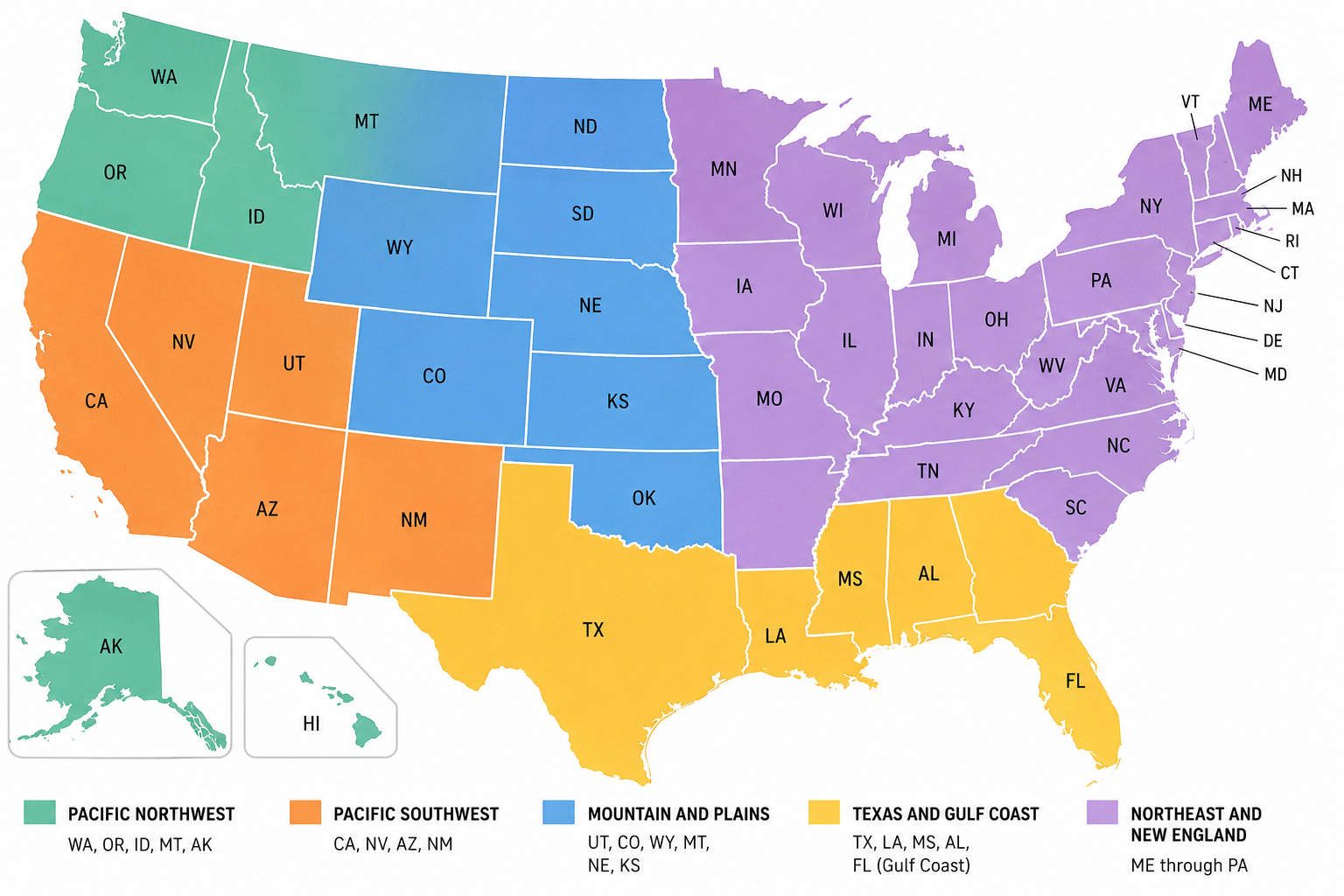
PACIFIC NORTHWEST
WA, OR, ID, MT, AK - Construction in the Pacific Northwest is driven by persistent rainfall, cool temperatures, and a strong emphasis on moisture management. Wall assemblies typically include rainscreens, high-quality weather barriers, extensive flashing, and fiber-cement, cedar, or engineered wood siding to protect the structure and promote drying. Seismic design in much of the region requires holdowns, anchor bolts, and continuous tie-down systems, while mountain areas add significant snow loads. Douglas Fir framing, borate treated interior and preservative-treated exterior sill plates, footing drains, and waterproofed crawlspaces and basements are standard practice.
PACIFIC SOUTHWEST
CA, NV, AZ, NM - The Pacific Southwest combines seismic design, wildfire exposure, extreme heat, and expansive soils, making structural engineering and code compliance particularly demanding. Holdowns, shear walls, collectors, and rod systems are common, especially in California, while post-tensioned slabs are widely used to manage soil movement. Stucco is the dominant exterior finish at lower elevations, with ignition-resistant assemblies and fire-treated materials often required in wildfire-prone areas. Termite protection, energy codes such as California Title 24, and wide swings between desert, coastal, and mountain climates heavily influence construction methods.
TEXAS and GULF COAST
TX, LA, MS, AL, FL Gulf Coast Construction in this region is dominated by expansive clay soils, high humidity, hurricane wind loads, and termite exposure. Post-tensioned slab-on-grade foundations are common, paired with a continuous structural load path using straps, clips, and anchors from roof to foundation. Moisture management focuses on controlling inward vapor drive, air leakage, and HVAC-related condensation. Coastal projects often require corrosion-resistant fasteners and connectors, along with impact-resistant openings in wind-borne debris zones.
MOUNTAIN AND PLAINS
UT, CO, WY, MT, NE, KS This region is shaped by high winds, heavy snow at elevation, expansive soils, and large seasonal temperature swings. Structural systems emphasize uplift resistance, robust connectors, and snow-load detailing, while problematic soils may require drilled piers, grade beams, or void forms. Low humidity and intense solar exposure make air sealing, continuous insulation, and proper vapor control essential. Exterior finishes commonly include fiber-cement siding, stucco, stone veneer, and engineered wood products selected for durability and minimal maintenance.
NORTHEAST and NEW ENGLAND
ME through PA Building in the Northeast and New England is driven by deep frost, heavy snow loads, freeze-thaw cycles, and stringent energy code requirements. Foundations typically consist of full basements or frost-protected systems extending below frost depth, with drainage and waterproofing designed to manage groundwater and snowmelt. Wall assemblies often incorporate dense insulation, exterior rigid foam, and advanced air sealing to reduce thermal bridging and condensation. Common exterior materials include fiber-cement, brick, and cedar shingles, while structural design accounts for snow drifting, ice dams, and occasional coastal wind exposure.
The difference is in the “details”
WHAT SETS US APART
25+
YEARS OF INDUSTRY EXPERIENCE
DIVISIONS 6 & 7
COMPLETE CSI SCOPE
5
USA BUILDING REGIONS
1
COMPLETE DELIVERABLE
Complete scope in one deliverable.
Structural hardware, lumber, building envelope, and flashing reviewed together and delivered together. One list your supplier can work from immediately.
Built for the markets we serve.
California seismic requirements. Pacific Northwest envelope details. Texas wind uplift. We understand the regional codes and construction conventions that affect your specific job site.
AI-assisted. Field-verified. Process-driven.
We use AI tools and purpose-built takeoff software, each optimized specifically for Division 6 and 7 scope. The methodology for working through detailed plan pages has been refined over three decades of field experience. Every takeoff follows a proven process built to find what others miss.
Every exclusion resolved or documented.
When the plans are unclear, we investigate and document. You receive a more complete deliverable and a clear record of every decision made along the way.
READY TO
GET IT RIGHT?
GET STARTED
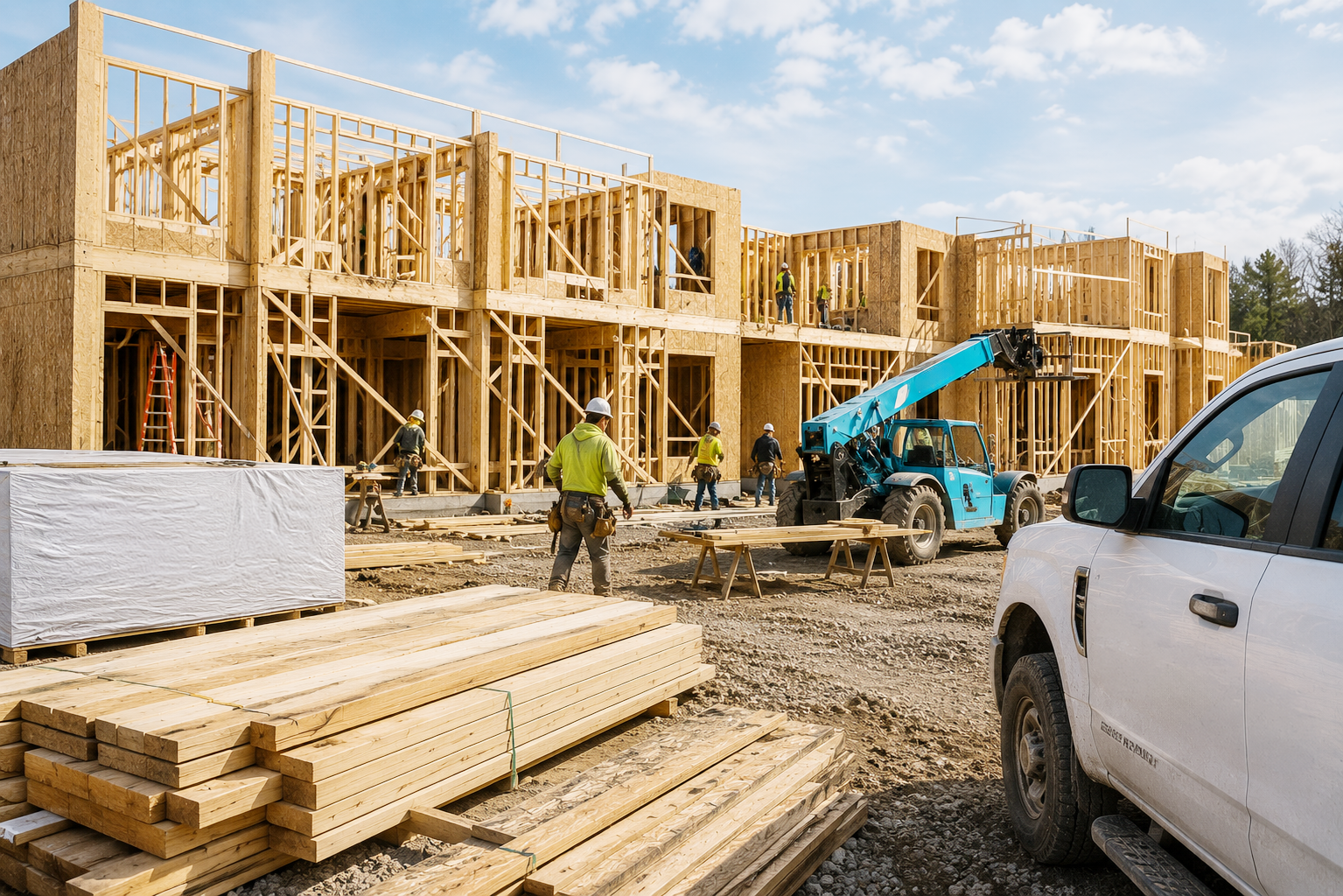
West Coast • Texas • National Available
CLIENT PORTAL COMING SOON!